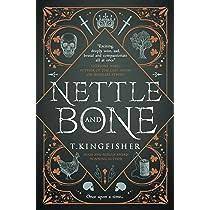
Nettle and Bone, by T. Kingfisher  

A sort-of princess, who is not quite a nun, builds a dog from bones to save her sister from an evil prince, because yes, this is simply the way things are done around here.

Picking up a delightful cast on route—an acerbic necromancer, a demon chicken, a bumbling fairy godmother and a stoical knight—our unlikely heroes must defeat a spell holding the kingdom in its power, and kill an evil prince before his heir’s christening. As you do.

“Magic never seemed to be much use at doing the things you wanted done in a reasonable time frame.” ― T. Kingfisher, Nettle & Bone

The novel is frankly adorable and was received with great excitement, winning the 2023 Hugo Award for Best Novel and being nominated for the 2023 Locus Award for Best Fantasy Novel, and the Nebula Award for Best Novel of 2022. The tone is wry, homely, and fun, and the fairytale setting is extravagant with world-building, taking us from ‘the blistered lands’ through medieval countryside to a goblin market, and finally the labyrinth of crypts below the palace.

This is a simple quest narrative, well told, and boasting a delightful cast of loveable characters. If you’re looking for an easy, pacy, feel-good read, this is it. Sure, there’s a dark side to the political fairytale marriage where the prince is not charming and the princesses are replaceable, but stick with your friends and everything will come right in the end. With real life so full of tragedy, a bit of ‘happily ever after’ is a welcome relief.

If you’ve already read Nettle and Bone, let me know what you thought in the comments, and as always, don’t forget to sign up for future blog updates. 

Buy on kindle £4.68 

Paperback from AbeBooks £7.43

Follow the author @UrsulaV and if you want more book recommendations, follow me at @SLangridgeUK for updates on what I’m reading, or check me out on TikTok @theyrhymesometime
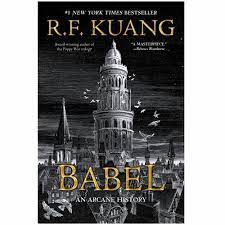
Babel, or the Necessity of Violence by R.F. Kuang

In 1830’s plague-ridden Canton, a peasant boy with a mysterious ‘gift’, is whisked away from certain death. His saviour and patron, an imperious Oxford lecturer, brings him to England and oversees the boy’s induction into the mysterious art of silverwork.
The boy, now a young man named Robin Swift, is admitted into Oxford University’s Royal Institute of Translation, or as the students and teachers call it, “Babel”. Babel is no ordinary language school however. It is first and foremost a silverwork laboratory, producing enchanted silver bars which power everything from factory machinery, to warships. This makes Babel vital to Britain’s industrial prowess and a crucial lynchpin her colonial machinations.

“Translation means doing violence upon the original, it means warping and distorting it for foreign, unintended eyes. So, where does that leave us? How can we conclude except by acknowledging that an act of translation is always an act of betrayal?” ― R.F. Kuang, Babel

Robin quickly falls in love; with Oxford, with academia, and with the other three other members of his cohort—all brilliant, young outsiders like himself. It isn’t long though, before putting his talent, and his mother tongue, to the service of the British Empire, starts to weigh on him.

Starting out as a sort of Dickensian Hogwarts, the novel shifts gears into a story of rebellion and resistance, reimagining Britain at the height of her colonial power, and the circumstances leading up to the opium wars. It is drowning in accolades, debuting at number one on The New York Times Best Seller list, and winning Blackwell’s Books of the Year for Fiction and the Nebula Award for Best Novel.

It is a big, ambitious book; a bellowing rebuke to colonial violence and the white elites who profit to this day, amidst handwringing and lukewarm protestations of impotence.

The book asks poignant questions about when—and how much—violence is acceptable as a form of protest, and whether change is even possible in the face of massive imbalances of power. As with most historical fantasy, a dark mirror is clearly being held up to the present, inviting us to question where our loyalties lie and how far we would be prepared to go to prevent an abominable act of injustice.

If I were nitpicking, I’d say there were some pacing issues. At times the story shuffles along too slowly and at others, skips important character-developing scenes, to catch you up hurriedly afterwards. The book is long and evidently had too much to pack in. 

It deserves your patience. The world is seductive and the shift from ‘wizarding campus novel’ to resistance lit, is deftly handled. As a bonus, language nerds will love that the ‘magic’ is drawn from etymology; harnessing the power of meanings ‘lost in translation’ across languages sharing common roots. 

Language in Babel, is power—literally the power to bend material reality to its whim—and in this spirit perhaps the novel itself is a weapon; a reminder that certain fights are ongoing, and that sometimes, violence is indeed a necessity.

 If you’ve already read Babel, or the Necessity of Violence, let me know what you thought in the comments, and as always, don’t forget to sign up for future blog updates. 

Buy on kindle £0.99 

Paperback from WH Smiths £7.99

Follow the author @kuangrf and if you want more book recommendations, follow me on twitter @SLangridgeUK for updates on what I’m reading or check me out on TikTok @theyrhymesometime

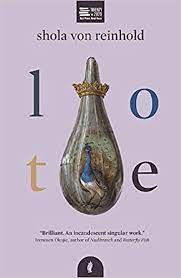
Lote by Shola von Reinhold 

As laconically seductive as the 1920’s which so inspire its heroine, Lote is a tantalising work of black, queer, speculative fiction. Appropriately genre-bending in its style, it combines the page-turning appeal of an investigative thriller, with the nonchalant grace of a period piece set in the modern day. 
Like Europeans in a Henry James, we would be creatures of genteel penury, full of education, artifice, a little vampiric, duping all the dull rich people around us. Except we were Black, except were poor, except we were basically self-taught (by their standards), except we were infinitely more subtle and fabulous, as far as we were concerned.

Mathilda is an escape artist. She has many names and specialises in her own reinvention in the pursuit of a life of beauty and glamour. An ‘Arcadian’, she is much more interested in the past than the present, and spellbound by her ‘fixations’—flashes of inspiration connecting her to figures from the past—she gets herself accepted onto a prestigious, if strange and secretive, residency in order to continue her ‘research’ into their lives.

Dripping with baroque prose, charming characters, and historical references to forgotten Black modernist figures, the book is as decadent as a goblet of foamy pink champagne in a dining hall draped in candlelight. It absolutely delights in its own opulence, channeling all the energy and frivolity of the Bright Young Things, to waltz you through a mystery that asks whether certain historical truths are forgotten, or mislaid, on purpose.

LOTE, is Scottish author, Shola von Reinhold‘s debut novel, and won the Republic of Consciousness Prize and the James Tait Memorial Prize in 2021. If you’ve already read it, let me know what you thought in the comments, and as always, don’t forget to sign up for future blog updates. 

Buy on kindle £3.99 

Paperback from World of Books £7.90

Follow the author @socialmedea__

Want more book recommendations? Follow me on twitter @SLangridgeUK for updates on what I’m reading.

Check me out on TikTok @theyrhymesometime

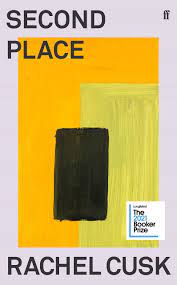
Second Place by Rachel Cusk

An intimate work of feminist realism that doesn’t pull its punches. Told in the form of letters from its middle-aged, female narrator, M, it considers the terrible savagery of the human ego, and the atrocities it commits against itself and those it is closest to.
Why do we live so painfully in our fictions? Why do we suffer so, from the things we ourselves have invented?

M lives a secluded life with her second husband out on the swamp where he grew up. Scarred by the world and its brutality, she is nevertheless unwilling to detach completely, and so to nurture the sense she craves of being ‘connected’ to the art world, she invites artists in residence into her sanctuary. These visitors stay in ‘the second place’, a neighbouring cottage on their land. When she builds up the courage to invite an artist whose work struck her powerfully at a low point in her life, the impact of his presence unleashes unexpected violences, and forces her to confront some of her own. 

The novel considers the flimsy constructs we call identity, and how we piece together our personal narratives from the detritus of our own fantasies painted over by the assumptions and criticisms of others. It records the intricacies of M’s subjectivity with Tolstoyan exactitude, allowing her generosity and strength of spirit to exist alongside the petty, self-indulgent egoisms that underlie her desperate need to be seen.

The secondary characters too, sway unsettlingly between painfully sympathetic and revoltingly absurd, and the little cast assembled in the oppressive environs of the swamp, provide the raw materials for an unflinching psychodrama with notes of Shakespearean tragicomedy.

Published in 2021, The novel was longlisted for the 2021 Booker Prize and shortlisted for the Governor General’s Award for English-language fiction. It’s a potent, powerful text, that catches and holds our gaze in its canvas, and dares us to look away.

If you’ve already read it, let me know what you thought in the comments, and as always, don’t forget to sign up for future blog updates. 

Buy on kindle £5.99 

Paperback from World of Books £10.89

Want more book recommendations? Follow me on twitter @SLangridgeUK for updates on what I’m reading.

Check me out on TikTok @theyrhymesometime

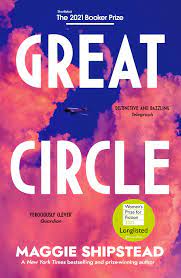
Great Circle, by Maggie Shipstead 

Strap in for an epic journey, following a female aviator (inspired by Amelia Earheart) who disappears while attempting to become the first person to fly a circle around the Earth, intersecting both poles.
The novel soars through a landscape rich with complex characters and intimate perspectives on historical events, spanning the turbulent years from the nineteen twenties to the modern day. The aviator, Marian Graves, is a single-minded force of nature, who refuses to allow the conventions of her time to restrict her. We accompany her through a childhood in rural Montana, dressing as a boy and smuggling alcohol during Prohibition, to her service as one of the first female pilots in England during the second world war, and finally, on her fateful journey over Antarctica.

At some point she would have found the edge of her own courage. There is nothing for it but to adjust, be humbled. So she is not exactly who she had thought. So what. She will be someone different.

The novel charts other stories too: that of Marian’s parents, her twin brother, Jamie, and their childhood friend, Celeb, as well as intermittently swerving into the present day where a Hollywood actress playing Marian in a movie about her life, pieces together clues about what might have become of her.

Marian remains the powerful engine of the book however, the perfect heroine for a novel grappling with the vertiginously widening scale of the twentieth century. With the backdrop of globe-trotting exploration, technological breakthroughs, and war, the restless hunger which drives Marian’s desire to fly (to keep moving, to escape), is equally fraught with a suicidal need to push boundaries and to toy with its own destruction. Perhaps this is why, for a story so full of life—its characters exploding with will and desire—the book is also a reconnaissance of loss; a confrontation with emptiness, death and disappearance; with the unchartable that lurks at the edges of what we know.

An exquisitely written and lovingly-rendered story, impressively researched and adroitly pitched for the concerns of a modern day audience, it is definitely worth the read. It was shortlisted for the 2021 Booker Prize, and the 2022 Women’s Prize for Fiction, and received glowing praise from critics. 

If you’ve already read it, let me know what you thought in the comments, and as always, don’t forget to sign up for future blog updates. 

Buy on kindle £4.99 

Paperback from Better World Books £4.26

Follow the author @MaggieShipstead

Want more book recommendations? Follow me on twitter @SLangridgeUK for updates on what I’m reading.

Check me out on TikTok @theyrhymesometime

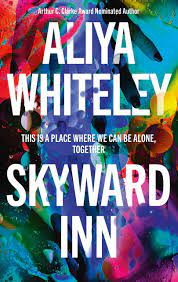
Skyward Inn by Aliya Whiteley 

A strange, quiet book, where the speculative elements are painted so lightly, you won’t realise you’re reading sci fi until you’ve been sucked into a story about love, family and community in a forgotten West Country village.
Jem runs a small rural Inn, serving brew to a smattering of locals alongside her immigrant partner, Isely; a love affair that seems both intensely intimate and frustratingly unconsummated. The community where they live, forms part of The Protectorate, a partitioned area of the UK that separated itself from the outside world in protest over the invasion of Qita, Isley’s home planet. The battle for Qita ended before it begun, won by humanity without a shot fired, a fact explained away by the pacifist nature of Qita’s people.

Jem lives a carefully compact existence; innkeeper, resentful sister to the local councillor, and estranged mother to a wayward son, until outsiders arrive to penetrate the studied calm.

The guide laughed at him. ‘Somebody told me that [Where to babies come from?] was the most difficult question you can human. Is that true? I heard you squeeze them out of yourselves, and cut them free. They do not decide to come free themselves!’

The book holds its cards close to its chest and although I was sucked in from the beginning, it wasn’t until the final quarter that I really sat up and realised I was reading something important. Expertly woven into a story about intimacy and independence, selfhood and community, are deeper questions about how and why we reach for each other, and what we might be prepared to sacrifice not to feel alone.

The novel was a finalist for the 2021 BSFA Award for Best Novel and Arthur C. Clarke Award, as well as being named one of the five best science fiction novels of the year by the Financial Times. It has been monikered a ‘modern classic’, something which gets bandied around a lot, but that I think in this case is valid. This book is grappling with something timeless and vital, and doing it in a perfectly paced and plotted story that I believe will hold out against the test of time.

If you’ve read Skyward Inn, let me know what you thought in the comments, and as always, don’t forget to sign up for future blog updates. 

Buy on kindle £5.99 

Paperback from Awesome Books £6.05

Follow the author @AliyaWhiteley

Want more book recommendations? Follow me on twitter @SLangridgeUK for updates on what I’m reading.

Check me out on TikTok @theyrhymesometime

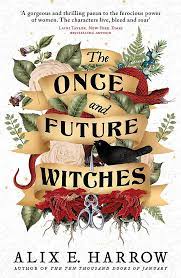
The Once and Future Witches, by Alix E. Harrow

An oppressive shadowy force weighs on the inhabitants of New Salem and it’s down to three estranged sisters to rally the voices of dissent and arm themselves for a fightback.
Somewhere between historical fantasy, fairytale, and a feminist call to arms, this is a charming story of magic, rebellion and sisterhood, with a host of wonderful characters, and plenty of action to keep you entertained.

Proper witching is just a conversation with that red heartbeat, which only ever takes three things: the will to listen to it, the words to speak with it, and the way to let it into the world. The will, the words, the way…

The town of New Salem is an echo of 1600’s America, complete with suffragettes and racial segregation, but the characters are made for today’s battles; the fight for class, race, gender and sexual equality. Fittingly, the folklore which forms the magical collective consciousness of the novel – the nursery rhymes, sayings and children’s stories – is all invitingly familiar, teasing us with the promise of magic at our own finger tips. The world is not our world, but we are encouraged to feel part of the secretive pact of information sharing, solidarity and insurgency, as the Eastwood sisters learn to extend their circles of trust, past the point where it is comfortable, in order to harness the strength they need to defeat their foe in the book’s tragically stirring finale.

The novel is Hugo nominated Author, Alix E Harrow’s second novel, and it won the British Fantasy Award’s Robert Holdstock Award for Best Fantasy Novel in 2021. For those of you who are suckers for a bit of magic, this will definitely inspire you to get in touch with your inner witch, and maybe stir up some mayhem while you’re at it.

As always, don’t forget to sign up for future blog updates. 

Buy on kindle £4.99 

Paperback from BUUKs £6.99 

Follow the author @AlixEHarrow

Want more book recommendations? Follow me on twitter @SLangridgeUK for updates on what I’m reading.

Check me out on TikTok @theyrhymesometime

Speculative Reader’s Best of 2022

I read lots of great books this year, but have whittled it down to my favourite five. If you have any recommendations for books I should read in 2023, I’d love to hear them, so please drop me a note in the comments, and as always, don’t forget to sign up for future blog updates. 

My top five reads from 2022, in no particular order…


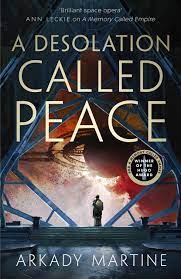
Best space opera: A Desolation Called Peace by Arkady Martine 

Overflowing with wonderful characters, a charming love story, elegantly rendered intergalactic politics and some fascinating philosophical questions to boot, this is an exciting, glorious book and you should read it.


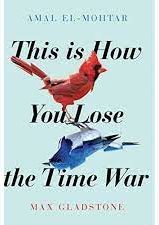
Best sci-fi:  This Is How You Lose The Time War, by Amal El-Mohtar and Max Gladstone

I can’t stop recommending this to everyone who’ll listen. A heart-wrenching story of love, friendship, and solidarity, staged against an ideological cold war for the fate of the universe. I doubt you’ve read anything like it before and you should absolutely read it now.


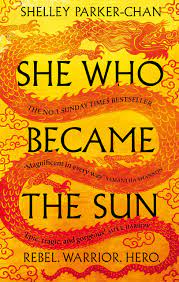
Best historical fantasy: She Became The Sun, by Shelley Parker-Chan

An epic story of human will, set in 1300’s China. The heroine is irresistible, the world achingly real and the story of a peasant monk’s mission to rewrite their own fate is and change the world is utterly captivating, you won’t be able to put it down.


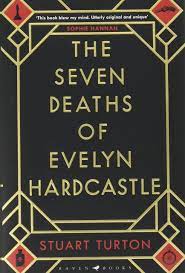
Best speculative detective: The Seven Deaths of Evelyn Hardcastle, by Stuart Turton

If you’re a sucker for a classic whodunnit and you’re down for some speculative genre-bending, you will absolutely adore this book. Everyone I know who’s read it has raved about it, so if you’re looking for something gripping and eminently readable, get ready to be charmed.


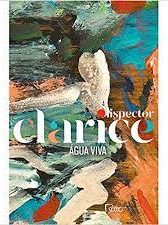
Best novella: Agua Viva, by Clarice Lispector

An absolute flying gut punch of a book. To say it’s a novella is slightly misleading, but I don’t know what else to call it. It’s an immersive experience in which you enter the current of another’s mind; a mind painfully astute, exquisitely poetic, and utterly consuming. Brace yourself, breathe deep and dive in.


Want more book recommendations? Follow me on twitter @SLangridgeUK for updates on what I’m reading.

Check me out on TikTok @theyrhymesometime


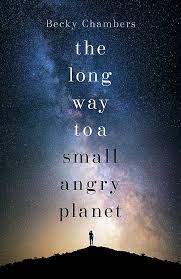
The long way to a small angry planet by Becky Chambers

This debut novel, originally self-published via a kickstarter campaign, has since become a critically acclaimed series, totalling four novels and a short story.
Unusual in its tone and pacing, the story follows the multi-species crew of The Wayfarer, a  tunnelling ship, contracted to build wormholes in space. Books in this genre usually focus on intergalactic politics, space exploration and battles, but this one centres itself on the day to day lives of its characters. It is a small and wholesome story, refreshingly cheerful—more a feel-good soap opera that happens to be set in space, than a traditional space opera.

“All you can do, Rosemary – all any of us can do – is work to be something positive instead. That is a choice that every sapient must make every day of their life. The universe is what we make of it. It’s up to you to decide what part you will play.”

The book meanders through a series of planetary stops and chance meetings which are designed to develop the characters and the world, rather than to push the plot forward. Key moments of tension simply happen, and then pass by, the repercussions reassuringly small scale, as the crew (and therefore the reader) get to know each other and their world a little better.

There are some lovely depictions of friendship and acceptance, and the alien species, with their physiognomical and cultural differences, are well conceived and crafted. The author makes full use of the opportunities she creates to muse on our earthly history and customs, with everything from nuclear families, war, property and gender, coming gently and generously under the microscope.

This is a great, easy read, with lovingly painted characters and plenty of heart, and as a bonus, if you like it, there’s four more to get stuck into.

As always, don’t forget to sign up for future blog updates. 

Buy on kindle £4.99 

Paperback from Awesome Books £4.59 

Want more book recommendations? Follow me on twitter @SLangridgeUK for updates on what I’m reading.

Check me out on TikTok @theyrhymesometim

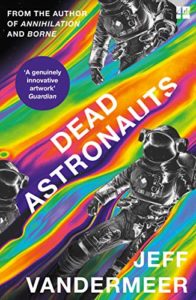
Dead Astronauts by Jeff VanderMeer

This is a massive, multiverse-traveling, post-human piece of apocalyptic fiction, the likes of which—I’ll wager—you have never seen before. The book is extremely experimental, packed with ideas and risk, and VanderMeer’s prose is an experience all in itself; succulent and mellifluous.

“Woken from a dream of blossoms into a swaying disintegration. For that was what bodies wanted: To come to rest. To know no more.” Dead Astronauts

We start out as three almost-human/all-too-human warriors, fighting to save an earth which has been made uninhabitable by the machinations of The Company and its puppet; the mad, tortured scientist, Charlie X. The warriors cannot be sure if the dark bird and the blue Fox are fighting with, or against them, but they are in love—with each other and the world—and they will throw everything they have at this last-ditch attempt at survival.

Then you are Sarah, a homeless woman, camping under a bridge, building a relationship with a salamander. You are behemoth, a gargantuan mud fish; you are the dark bird, you are the blue fox. Everything is fractured, infiltrated, genetically modified and collapsing, until at times the narrative itself falls apart, the death throes of consciousness and ego, descending into free form poetry and on occasion, just numbers.

Like I said, it’s VERY experimental. The prequel, Borne, was wonderful and brave but let itself down with a disappointingly trite ending. If Dead Astronauts was VanderMeer’s effort to fix that, it certainly didn’t fall short on originality, but in the end, lacked heart. The book ends up feeling cold, missing the warmth that made Borne so special. The problem with a human trying to write post-human sci-fi, is the trap of generating distance from your own species by revelling in its degeneration. Ultimately this falls flat. Not only is it depressing, it is all too navel-gazingly human.

There is no arguing with the fact that this is an important work, full of necessary questions and ideas, but unfortunately, it’s not a great story. Read it for the prose, read it for the discombobulation, but read Borne first, and if you make it to Dead Astronauts afterwards, let me know what you think. 

As always, don’t forget to sign up for future blog updates. 

Buy on kindle £5.49 

Paperback from WOB £5.49 

Follow the author on twitter @jeffvandermeer

Want more book recommendations? Follow me on twitter @SLangridgeUK for updates on what I’m reading.

Check me out on TikTok @theyrhymesometime