
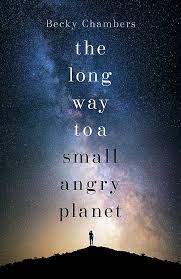
 This debut novel, originally self-published via a kickstarter campaign, has since become a critically acclaimed series, totalling four novels and a short story.
Unusual in its tone and pacing, the story follows the multi-species crew of The Wayfarer, a tunnelling ship, contracted to build wormholes in space. Books in this genre usually focus on intergalactic politics, space exploration and battles, but this one centres itself on the day to day lives of its characters. It is a small and wholesome story, refreshingly cheerful—more a feel-good soap opera that happens to be set in space, than a traditional space opera.
“All you can do, Rosemary – all any of us can do – is work to be something positive instead. That is a choice that every sapient must make every day of their life. The universe is what we make of it. It’s up to you to decide what part you will play.”
The book meanders through a series of planetary stops and chance meetings which are designed to develop the characters and the world, rather than to push the plot forward. Key moments of tension simply happen, and then pass by, the repercussions reassuringly small scale, as the crew (and therefore the reader) get to know each other and their world a little better.
There are some lovely depictions of friendship and acceptance, and the alien species, with their physiognomical and cultural differences, are well conceived and crafted. The author makes full use of the opportunities she creates to muse on our earthly history and customs, with everything from nuclear families, war, property and gender, coming gently and generously under the microscope.
This is a great, easy read, with lovingly painted characters and plenty of heart, and as a bonus, if you like it, there’s four more to get stuck into.
As always, don’t forget to sign up for future blog updates.

Buy on kindle £4.99
Paperback from Awesome Books £4.59
Want more book recommendations? Follow me on twitter @SLangridgeUK for updates on what I’m reading.
Check me out on TikTok @theyrhymesometim
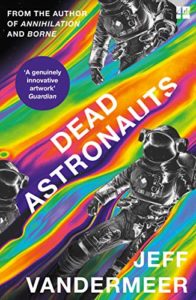 This is a massive, multiverse-traveling, post-human piece of apocalyptic fiction, the likes of which—I’ll wager—you have never seen before. The book is extremely experimental, packed with ideas and risk, and VanderMeer’s prose is an experience all in itself; succulent and mellifluous.